




















 Back
Back



Minimalist Engagement Rings: Why Less Is More
2026-03-27 02:54:54
Minimalist Engagement Rings: Why Less Is More
Overview:You've been scrolling through Pinterest boards filled with halos, pavé bands, and intricate vintage settings. The options feel endless—and honestly, a bit overwhelming. But something keeps pulling you back to those clean, simple designs. The ones that don't try so hard.
Here's the truth: a minimalist engagement ring isn't about having less money to spend or less taste to express. It's about knowing exactly what you want and refusing to let extra details dilute it. This guide will walk you through whether this style fits your life, your hands, and your budget—without the fluff.
Step 1: Ask Yourself—Is a Minimalist Engagement Ring Right for Me?
The minimalist trend isn't just aesthetic. It's practical. But it's not for everyone.
You might love a minimalist ring if:
- You wear gloves for work—healthcare professionals, chefs, and lab technicians often struggle with high settings and chunky bands
- Your style is already pared down—if your closet is mostly neutrals and clean lines, an elaborate ring will feel out of place
- You want something that ages well—minimal designs don't scream "2020s trend"; they tend to look timeless
- You'd rather spend on quality over quantity—a thinner band and simpler setting often means budget for a better stone
You might struggle with minimalism if:
- You love vintage or maximalist fashion—the disconnect between your ring and your daily style can nag at you
- You want maximum sparkle—minimal settings typically show off one stone, not a glittering surface area
- You're worried about "looking engaged"—a subtle ring sometimes gets missed; you might find yourself explaining your status more often
Quick check: Look at the jewelry you actually wear daily. Not the pieces in your box—the ones on your body right now. If they're simple, a minimalist ring will feel like home.
Step 2: Consider Your Hands—Minimalist Engagement Ring for Small Hands
Here's something jewelers don't always mention upfront: proportion matters more than carat size.
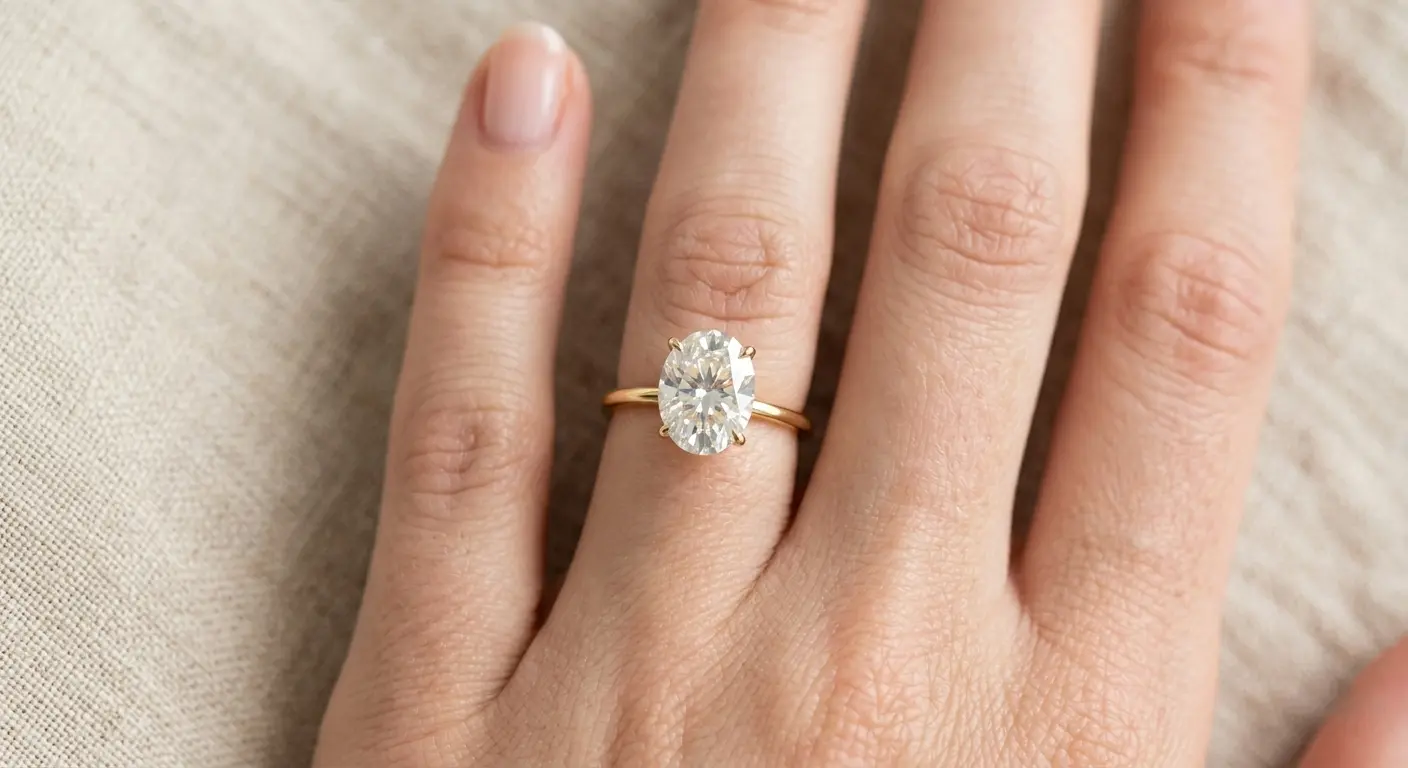
A massive halo on a size 4 finger can look like costume jewelry. But a delicate solitaire? That reads as intentional and elegant.
What works for smaller hands:
- Thin bands (1.5–2mm)—they don't overwhelm slender fingers and create the illusion of length
- Oval or marquise cuts—these shapes draw the eye vertically, making fingers appear longer
- Bezel settings—the metal rim around the stone sits low and clean, perfect for petite proportions
- Vertical settings—east-west orientations or elongated shapes suit small hands better than wide, horizontal designs
What to avoid:
- Wide bands (3mm+)—they can make small fingers look stubby and dominate your hand
- Double halos or heavy pavé—the visual weight fights against your natural proportions
- High cathedral settings—they catch on everything and look top-heavy on smaller hands
Practical tip: If you have small hands but love a particular bold design, try it on in person. Photos lie. Your eye adjusts to what's actually on your finger, not what looked good on a model.
Step 3: Work With Your Budget—Affordable Minimalist Engagement Ring Options
Minimalist rings often cost less—but not because they're "cheap." You're simply paying for less metal and fewer small stones.
Where the savings come from:
| Design Choice | Typical Savings |
| Plain band vs. pavé | $300–$800 |
| Solitaire vs. halo | $500–$1,500 |
| 14K gold vs. 18K | $200–$400 |
| Lab-grown diamond | 40–60% less than natural |
Budget-friendly minimalist styles that don't look cheap:
- Tension settings—the stone appears to float, creating drama without extra diamonds
- Bezel-set solitaires—the metalwork looks intentional and modern, not like you skipped the extras
- Colored gemstones—a sapphire or moissanite center stone costs significantly less than diamond and feels distinctive
- Mixed metals—a yellow gold band with white gold prongs adds visual interest without added stones
The real budget hack:
Spend your money on the stone's cut. A well-cut 0.7-carat diamond faces up nearly as large as a poorly cut 1-carat—and sparkles significantly more. In a minimalist setting, that cut quality is everything.
Step 4: Choose Your Band—Thin Band Minimalist Engagement Ring Styles
The band is where minimalist rings live or die. Too thin, and it bends or snaps. Too thick, and you've lost the aesthetic.
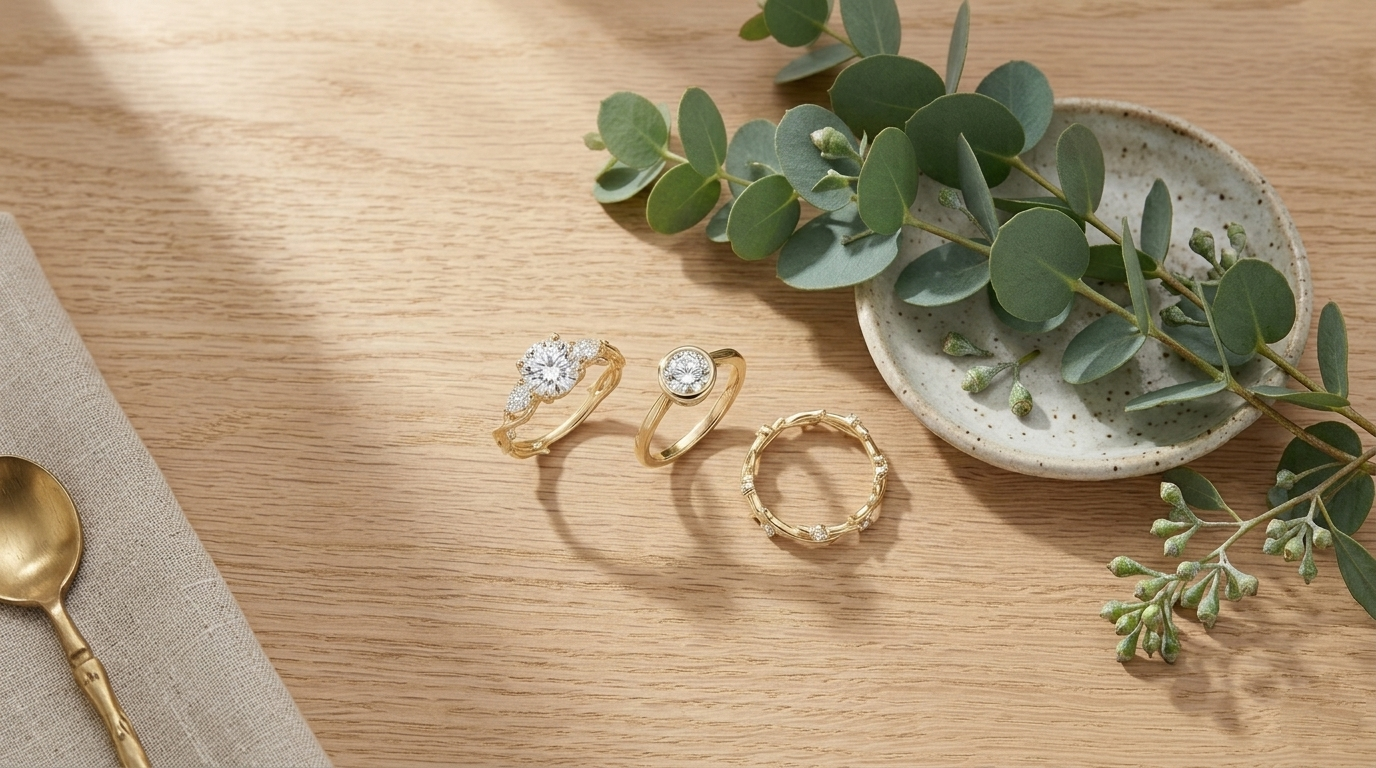
The sweet spot:
- 1.5mm for accent bands or very petite hands
- 1.8–2mm for daily wear with a solitaire (most durable)
- 2.2–2.5mm if you want a slightly bolder look without going chunky
Setting styles that complement thin bands:
Classic Prong (4 or 6 prongs)
- Maximum light exposure to the stone
- Timeless look that pairs with any wedding band
- Best for: Round, oval, and cushion cuts
Bezel Setting
- Metal rim protects the stone completely
- Low profile—won't catch on sweaters or gym equipment
- Best for: Active lifestyles, emerald cuts, and modern aesthetics
Tension Setting
- The stone appears suspended between metal
- Requires precise engineering—buy from reputable jewelers only
- Best for: Round and princess cuts, statement minimalism
Cathedral Setting (low profile)
- Prongs rise from the band itself, not a separate basket
- Adds subtle height without bulk
- Best for: Creating a "floating" look with security
Practical tip: If you're choosing a thin band, opt for 14K gold over 18K. The alloy is harder and more resistant to bending. Platinum is even better for durability, though it costs more upfront.
Step 5: Make It Yours—Subtle Customizations
Minimalist doesn't mean generic. The best simple rings have one distinctive detail that makes them unmistakably yours.
Ways to personalize without adding clutter:
- A single hidden gemstone—birthstone set inside the band, facing you
- Textured metal—hammered finish, matte surface, or subtle engraving
- Asymmetrical prongs—two gold, two platinum, or slightly offset placement
- A knife-edge band—triangular profile that catches light differently than a flat band
- Stacking considerations—design the engagement ring knowing what wedding band will sit beside it
What to avoid:
Don't add so many "subtle" details that they compete with each other. Pick one. Let it be the thing someone notices on their third look at your hand.
Final Thought
A minimalist engagement ring isn't a compromise. It's a decision to let one beautiful thing speak for itself.
You'll wear this ring through job interviews, hospital shifts, workouts, and quiet mornings at home. The question isn't whether it's impressive enough for Instagram. It's whether it feels right when you glance down at your hand—today, in five years, in twenty.
The best minimalist rings answer yes to all of that. And they do it without saying too much.

