


















 Back
Back


Moissanite vs Lab-Grown Diamond vs Cubic Zirconia (CZ): The Ultimate Guide to Brilliance, Durability & Value
2026-04-09 05:50:56
You've been staring at three words for the past hour: moissanite, lab diamond, CZ.
An engagement ring isn't just jewelry—it's a promise. But your budget has a ceiling, and the internet is screaming conflicting advice. Some say moissanite vs diamond is impossible to tell apart. Others warn that CZ vs diamond falls apart in months. And then there's that nagging fear: what if someone can tell?
You're not the first person lost in these terms. You won't be the last.
This guide cuts through the noise. No marketing fluff—just lab-grade physical data to help you understand the real differences between moissanite vs lab diamond and make the choice that fits your budget and your values.
Part 1: What They Actually Are (Cutting Through the Confusion)
Let's clear up the biggest misconception: not every sparkly stone is a diamond. But "not natural" doesn't mean "fake."
Lab-Grown Diamonds: Real Diamonds, Full Stop
Composition: 100% pure carbon. Identical physical and chemical properties to mined diamonds. The only difference? One formed underground over billions of years; the other grew in a lab over weeks.
Think of it this way: ice from your freezer and ice from a glacier are both ice.
Lab diamonds come with GIA or IGI certification. Professional gemologists can't distinguish them from mined diamonds without specialized equipment. This is the only industry-recognized "real diamond alternative."
Moissanite: The Premium "Look-Alike"
Moissanite is silicon carbide (SiC), originally discovered in a meteor crater. Today, it's exclusively lab-created.
It's brilliant, nearly as hard as diamond, and costs about one-tenth the price. But here's the truth: moissanite is a different gemstone entirely, not a diamond.
Cubic Zirconia (CZ): The Budget Imitator
CZ is a synthetic material that barely exists in nature. It sparkles fresh out of the box, costs next to nothing ($20-$100), and looks convincing—at first.
But its physical properties make it unsuitable for daily wear. Of the three, CZ is the only one we don't recommend for engagement rings.
Part 2: The Hard Data—How They Actually Compare
Screenshot this table. You'll want it later.
| Specification | Lab-Grown Diamond | Moissanite | CZ (Cubic Zirconia) |
| Chemical Composition | Pure Carbon (C) | Silicon Carbide (SiC) | Zirconium Dioxide (ZrO₂) |
| Mohs Hardness | 10 | 9.25 | 8–8.5 |
| Refractive Index | 2.42 | 2.65 | 2.15 |
| Fire/Brilliance | Classic white sparkle | Extreme rainbow dispersion | Flat, surface-level shine |
| Daily Durability | Lifetime | Excellent | Poor—clouds in months |
| Price Range | $1,500–$5,000 | $300–$800 | $20–$100 |
Round 1: Brilliance & Fire—Can You Tell by Looking?
Refractive index determines how much a stone "sparkles."
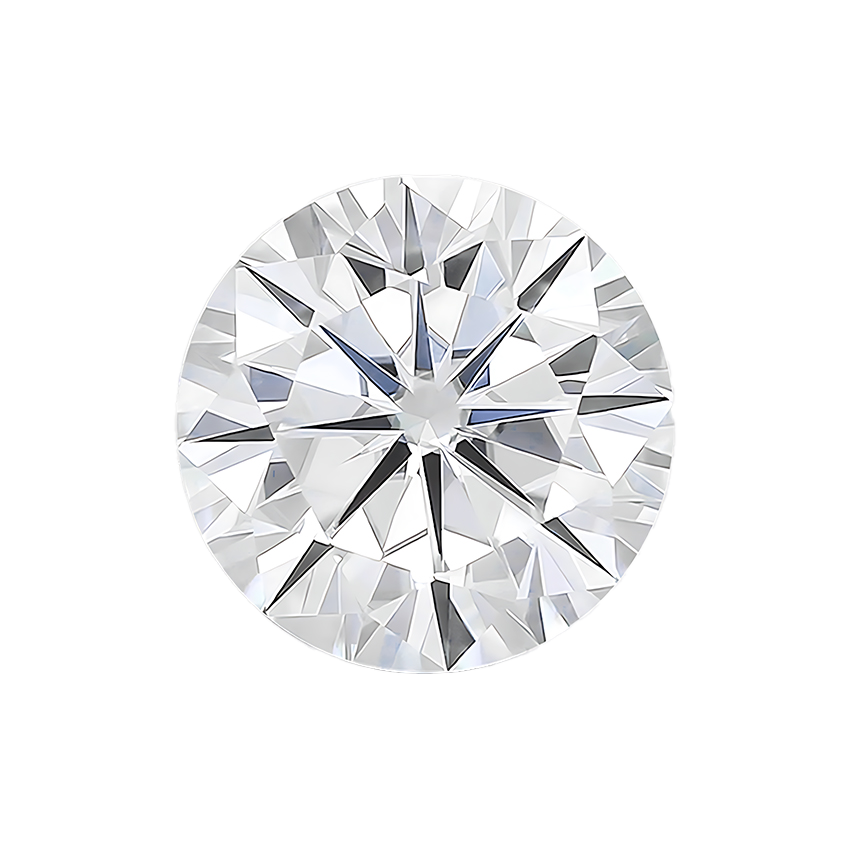
Lab diamonds refract at 2.42—that classic, deep white flash that the jewelry world has prized for centuries. It's sophisticated, timeless, and what people picture when they think "diamond."
Moissanite hits 2.65, which actually makes it more brilliant than diamond. But moissanite has something called "double refraction"—light splits into two beams as it enters the stone. The result? An intense "disco ball" rainbow effect in sunlight.
Here's what jewelers won't always say: that extreme fire is a giveaway. Someone who knows diamonds can spot moissanite by the rainbow overload.
CZ sits at 2.15. It looks bright when new, but the sparkle sits on the surface. No depth, no dimension.
Round 2: Durability—Will It Last a Lifetime?
Engagement rings take a beating. You wear them daily. You bump them, wash with them, live with them. Hardness isn't a luxury—it's essential.
Lab diamonds (Mohs 10) are the hardest natural substance on Earth. Only another diamond can scratch them. They'll look identical in 50 years.
Moissanite (Mohs 9.25) is remarkably durable. Daily wear won't faze it. For all practical purposes, it's "lifetime" material.
CZ (Mohs 8–8.5) is where people get burned. That hardness sounds decent, but it's not enough. After a few months of daily wear, microscopic scratches cover the surface. Light can't refract properly anymore. The stone turns cloudy, milky, dull.
This is why CZ engagement rings are a mistake. That $50 ring becomes unwearable within a year.
Round 3: Oil Resistance & Maintenance
Diamonds are naturally oil-attracting. They pick up hand cream, fingerprints, skin oils. But here's the thing: clean them, and they're instantly restored. A lab diamond worn for a decade shines like new after a quick wash.
Moissanite behaves similarly—easy to maintain, trouble-free.
CZ is different. It attracts oils and traps them. Scratches accumulate. The clouding isn't dirt—it's permanent surface damage. That's why CZ rings "get darker over time." They're not dirty; they're physically degraded.
Part 3: Price Tiers & The Truth About Resale Value
Let's be honest about something: outside of exceptional mined diamonds, most jewelry doesn't hold financial value on the secondary market.
But "investment value" and "long-term value" aren't the same thing.
Price Hierarchy
- Mined Diamonds: $10,000–$50,000+ (extreme pricing, brand premiums, monopoly markups)
- Lab-Grown Diamonds: $1,500–$5,000 (20–30% of mined diamond cost)
- Moissanite: $300–$800 (affordable, but prices keep dropping)
- CZ: $20–$100 (disposable fashion jewelry)
Long-Term Value Breakdown
CZ is fast fashion. Buy it for a beach vacation. Buy it as a placeholder. Don't buy it for a proposal.
Moissanite prices have been in freefall. What cost $800 five years ago costs $300 today. There's virtually no secondary market. You're buying consumption, not asset.
Lab-grown diamonds offer the best long-term value proposition. Yes, they're priced accessibly. But they carry the emotional weight of "real diamond," the physical permanence to become heirlooms, and the ethical clarity that younger buyers increasingly demand.
For $3,000, you can buy a 2-carat, VVS-clarity, D-color lab diamond. Try getting that from a mined diamond retailer.
Part 4: The Decision Framework—Which One Fits You?
Choose CZ If...
- You need a $30 "travel ring" for vacations (so you don't worry about loss)
- You want something temporary, purely for fashion
- Your budget is strictly under $100
Choose Moissanite If...
- Your budget caps at $500
- You genuinely love extreme rainbow fire
- You don't care if people know it's not diamond
- You want "sparkly, hard, and cheap" without the diamond label
Choose Lab-Grown Diamond If...
- You're shopping for an engagement ring that means something
- You want a genuine diamond—just not the mined diamond price tag
- You want heirloom-quality durability
- You care about ethics and environmental impact
- You want the prestige and confidence of real diamond
Lab-grown diamonds are the optimal choice for modern engagement rings. Same budget. Bigger stone. Real diamond. No compromises.
Conclusion: Why Lab-Grown Diamonds Win for Engagement Rings
Three facts to leave with:
- CZ isn't engagement-ring material. It clouds. It scratches. It disappoints.
- Moissanite isn't diamond. Its rainbow fire is beautiful—but it's also a tell.
- Lab-grown diamonds are real diamonds. Same chemistry. Same permanence. Fraction of the price.
If you're preparing to propose—if this ring needs to carry your intentions across decades—there's a clear winner.
Lab-grown diamonds give you 100% of the diamond experience at 20–30% of the traditional cost.
FAQ: Quick Answers for Google Snippets
Can moissanite pass a diamond tester?
A: Older thermal testers might give a false positive because moissanite conducts heat similarly. Modern electrical conductivity testers easily distinguish them. Professional labs have no trouble telling them apart.
Do lab-grown diamonds get cloudy over time?
A: Never. Like mined diamonds, lab diamonds are chemically inert. They don't oxidize, discolor, or degrade. A lab diamond will sparkle forever with basic cleaning.
Is CZ okay for an engagement ring?
A: We don't recommend it. CZ's 8–8.5 Mohs hardness can't withstand daily wear. Surface scratches accumulate within months, causing permanent cloudiness. Many CZ engagement ring buyers regret the choice within a year.
Can you tell lab-grown from mined diamonds by looking?
A: No. Even expert gemologists can't distinguish them visually. They share identical optical, physical, and chemical properties. Only specialized laboratory equipment can tell them apart.
Do lab-grown diamonds come with certificates?
A: Yes. GIA, IGI, and other major labs issue certificates for lab-grown diamonds with full 4C grading (carat, color, clarity, cut)—same format as mined diamond certificates.
Why are moissanite prices dropping?
A: Manufacturing technology has improved dramatically. What required expensive, complex processes five years ago is now efficiently mass-produced. Good for buyers today, but it means moissanite lacks price stability.

