





















 Back
Back


Engagement vs. Wedding Rings: What's the Difference
2026-04-01 03:38:08
Engagement vs. Wedding Rings: What's the Difference
You've been scrolling through ring photos for weeks. The engagement rings sparkle with diamonds. The wedding bands look... simpler. And somewhere between Pinterest boards and jeweler websites, a question keeps surfacing: do you need both? Are they the same thing? Can you skip one?
You're not overthinking this. Most people don't know the difference until they're standing in a jewelry store, suddenly aware that these two rings serve completely different purposes.
The good news? Understanding the distinction takes about five minutes. Making the right choice for your situation—that's what this guide is for.
What Each Ring Actually Means
Here's the distinction jewelers assume you already know: the engagement ring is given at the proposal. It traditionally features a center stone—usually a diamond—and is designed to catch light and attention. The wedding band is exchanged during the ceremony itself. It's typically simpler, designed to complement rather than compete.
Think of it this way: the engagement ring announces an intention. The wedding band seals a commitment. One is a question, the other is an answer.
This difference in engagement ring vs wedding band meaning matters more than most people realize. The engagement ring is about the moment—the surprise, the promise, the public declaration. The wedding band is about the everyday—the routine, the longevity, the quiet continuity of married life.
Some couples find this distinction meaningful. Others think it's outdated. Neither view is wrong—but knowing the difference helps you decide what actually matters to you, not what tradition says should matter.
Do You Actually Need Both?
The most common question jewelers hear: should I buy both engagement and wedding rings?
The honest answer: it depends. On your preferences. Your lifestyle. Your budget. There's no rule requiring both. Some couples skip the engagement ring entirely and put their budget toward a meaningful wedding band. Others love the tradition of stacking both rings together.
When One Ring Makes Sense
If you work with your hands—nurses, chefs, mechanics, artists—a single low-profile band might serve you better than a raised diamond setting that catches on gloves and equipment.
Similarly, if you simply don't love the look of engagement rings, or if the budget is tight right now, one beautiful wedding band is completely valid. Seriously. No one checks.
When Two Rings Work Better
If you love the symbolism of the proposal moment. If you want that visual statement of commitment. If you simply love how a diamond engagement ring looks alongside a simpler band—then yes, both rings make sense.
Many people find that the best engagement and wedding ring combinations create a look that's greater than the sum of its parts. The contrast between sparkle and simplicity can be striking.
Here's what jewelers don't always say upfront: you can always add a wedding band later. Some couples start with just an engagement ring, then purchase the matching band for their first anniversary. Others buy a simple band now and upgrade to a diamond-studded version down the road. The rings don't have to be purchased at the same time. They don't even have to match perfectly.
How to Wear Them (Or Not)
Tradition places the wedding band closest to the heart—meaning it goes on first, with the engagement ring stacked on top.
But modern couples wear their rings however they prefer. Stacked. On different hands. On a chain around the neck. Some people wear their engagement ring only for special occasions and their wedding band for daily wear. There's no jewelry police.
The Stacking Approach
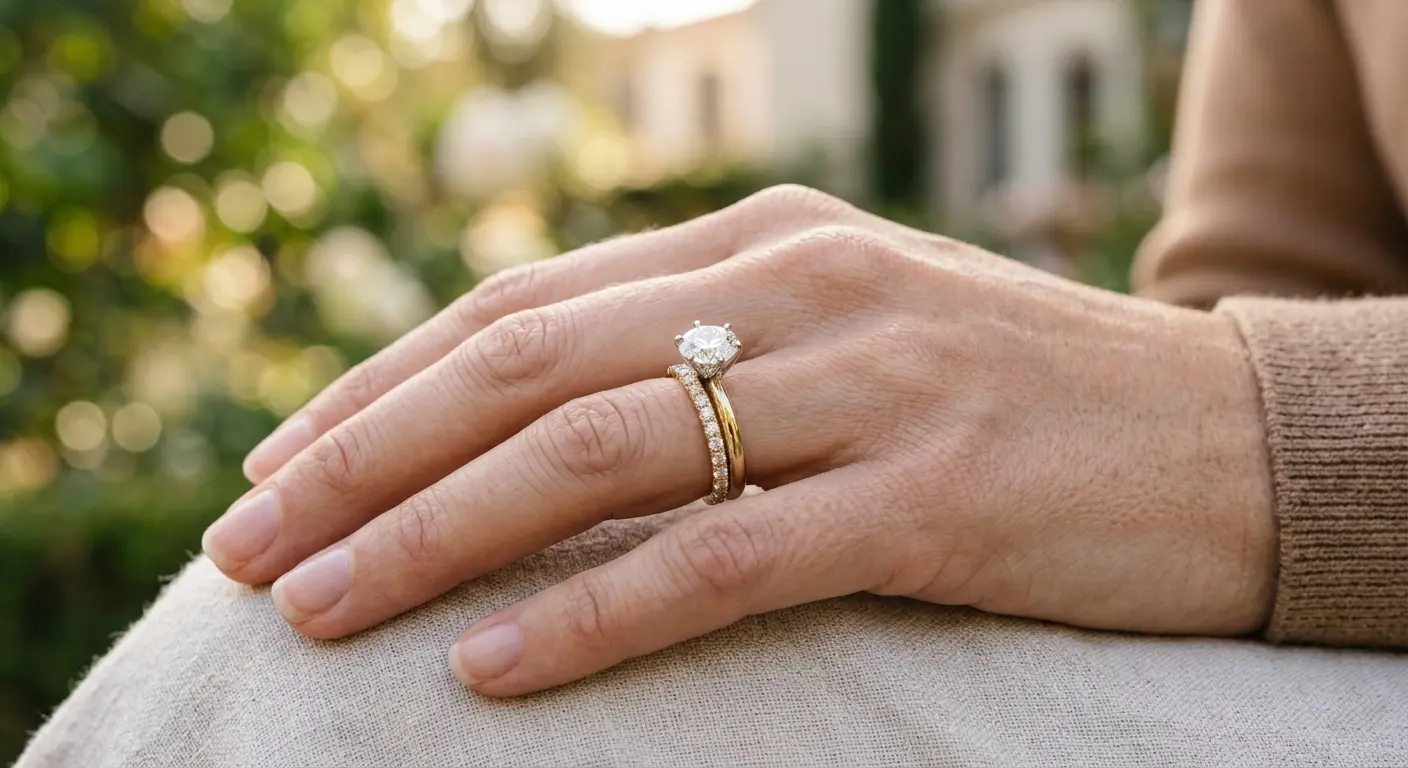
Most people who choose both rings wear them stacked on the left ring finger. The wedding band sits at the base, the engagement ring on top. This creates a cohesive look, especially when the rings are designed as a matching set.
But stacking isn't mandatory. Some people find two rings uncomfortable. The metal clicks against itself. The combined width feels bulky. If that's you, don't force it.
The Balance Between Simple and Statement
The simple wedding band vs diamond engagement ring combination is the most common for a reason. The diamond engagement ring provides sparkle and presence. The simple band offers contrast and practicality. Together, they create visual interest without overwhelming the hand.
If you're choosing this route, pay attention to how the rings sit together. A very tall engagement ring setting might leave a gap between the two bands. Some people love this look—it creates negative space, visual breathing room. Others prefer rings that sit flush against each other. Neither is wrong. It's just preference.
Making Them Work Together
Not all engagement and wedding ring combinations look good together. The metals might clash. The widths might feel off-balance. The styles might fight each other instead of complementing.
Metal Matching
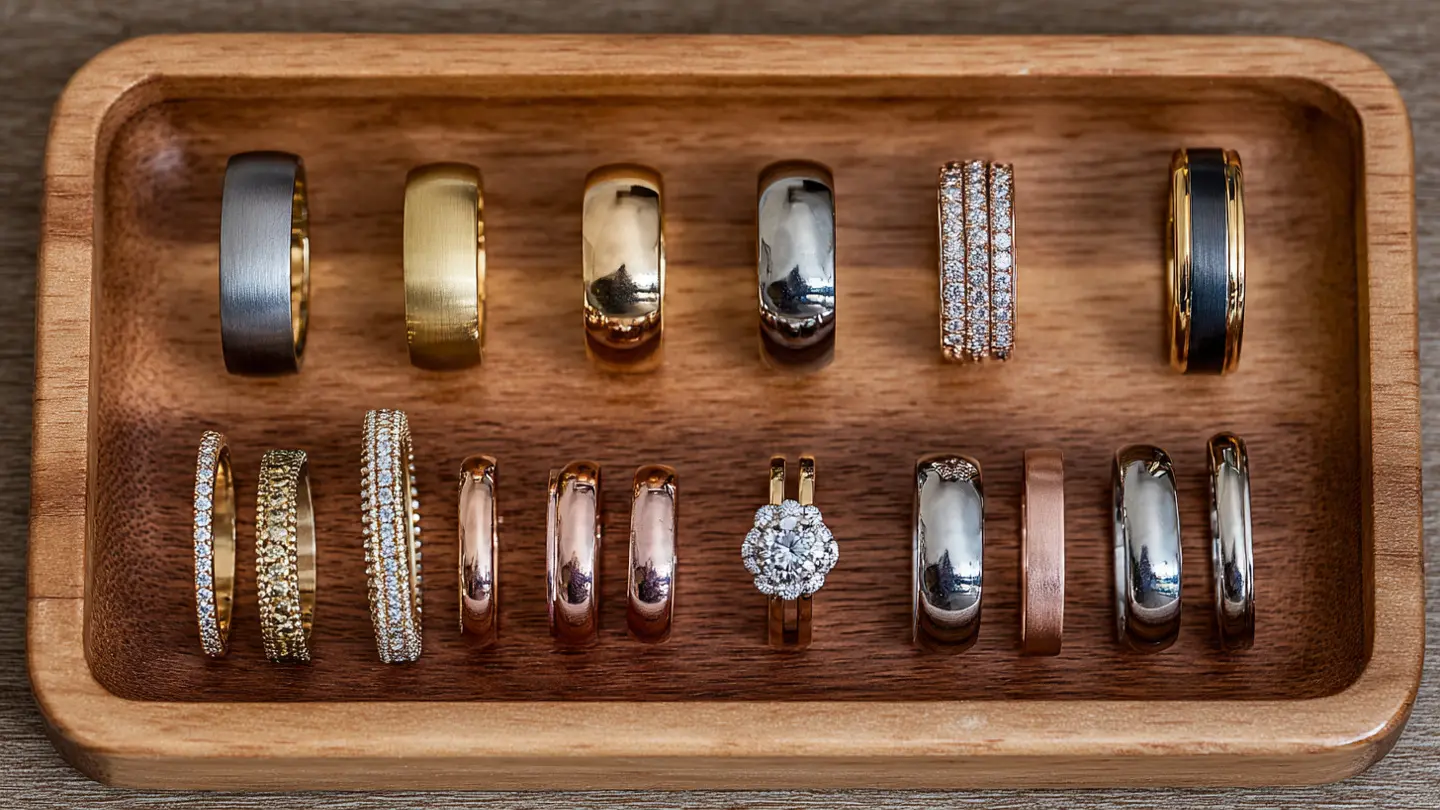
Platinum and white gold look nearly identical when new, but white gold requires periodic rhodium plating to maintain its bright white color. Platinum develops a patina over time—some people love this lived-in look, others don't.
If you're choosing different metals, make sure the colors are close enough to look intentional rather than mismatched. Yellow gold and rose gold are more forgiving. They can pair with each other or with white metals for a mixed-metal look that's currently trending.
Width and Proportion
A very thin engagement ring paired with a very thick wedding band can look unbalanced. Similarly, a wide engagement ring might overwhelm a delicate band.
Try to keep the widths within 1-2mm of each other for the most harmonious look. Though honestly? Some people deliberately choose contrasting widths for visual interest. Rules are just starting points.
Setting Considerations
If your engagement ring has a very low profile, most wedding bands will sit flush against it. If your engagement ring sits high off the finger—common with halo settings or tall prongs—you'll need a curved or contoured wedding band to avoid gaps.
Or you can embrace the gap. Some jewelers now design rings specifically meant to sit apart, creating a floating effect. It's a newer aesthetic, but it's catching on.
Making the Decision
You've done the research. You understand the symbolism, the practical considerations, the aesthetic options. Now it's time to choose—and then stop worrying about it.
The truth is, the "right" choice is the one that feels right to you. Some of the happiest couples I know have simple gold bands and no engagement ring at all. Others have elaborate stacked sets. Both are valid.
One Thing to Actually Do Before You Buy
Try on your chosen combination for more than thirty seconds in a jewelry store. Wear similar rings for a day if you can borrow them. Pay attention to how they feel when you type, when you wash your hands, when you reach into your pocket.
The most beautiful rings in the world aren't worth much if you never wear them because they're uncomfortable.
Also? Don't let a salesperson rush you. This isn't a decision that needs to be made in one visit. Sleep on it. Look at photos of the combination on actual hands, not just display models. Imagine wearing them in five years, in fifteen.
The Bottom Line
Engagement rings and wedding bands serve different purposes, carry different symbolism, and create different looks. You might want both. You might want one. You might start with one and add another later.
What matters isn't following tradition perfectly—it's choosing rings that match your relationship, your lifestyle, and your personal style. The best ring is the one you'll actually wear, happily, for years to come.
So: one ring or two? Simple or sparkling? Traditional or completely your own?
That's entirely up to you. And that's exactly how it should be.

