



















 Back
Back


Engagement Ring Inspiration: Simple & Minimalist Designs
2026-03-30 03:56:37
Engagement Ring Inspiration: Simple & Minimalist Designs
You've been scrolling for hours. Your Pinterest board has 47 pins, all starting to blur together. The minimalist engagement ring you want seems simple enough—until you realize "simple" comes in a dozen variations, each with its own trade-offs.
Here's the good news: narrowing down to a clean, understated design actually makes the decision easier, not harder. You just need to know which details matter and which ones you can ignore.
This guide walks you through four minimalist styles that are dominating 2025, what makes each one work, and how to choose based on how you actually live.
Thin Band Minimalist Engagement Rings with Hidden Halo
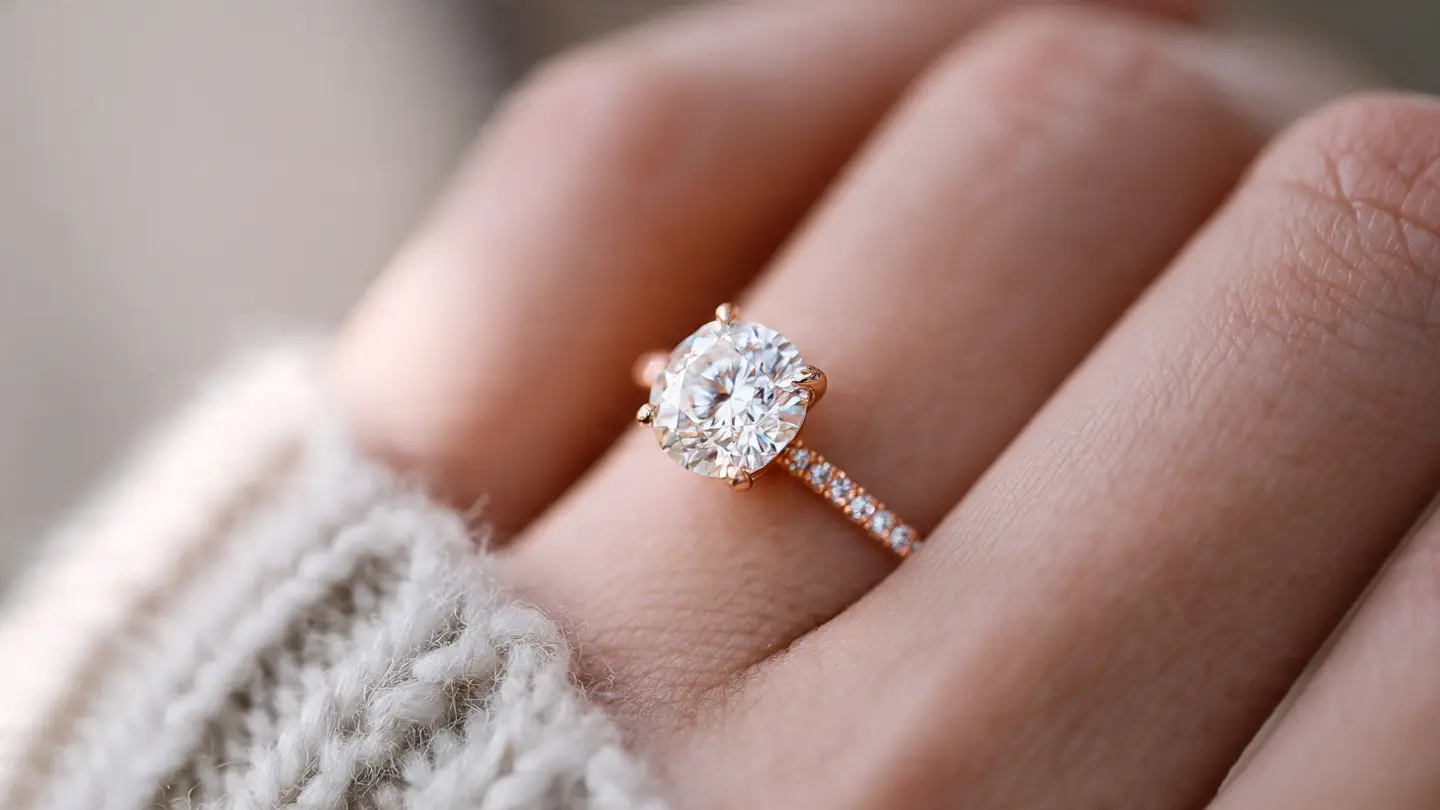
The hidden halo is jewelry's best-kept secret. From above, you see a clean solitaire. From the side—bam—there's a delicate circle of micro-pavé stones cradling the center diamond. It adds maybe $400-800 to the price but creates the illusion of a much larger stone without the visual clutter of a traditional halo.
Why the thin band matters
A band under 1.8mm creates that delicate, barely-there look that's everywhere right now. But here's what jewelers don't always mention upfront: bands this thin require more maintenance. You'll want to have the prongs checked every 6-8 months instead of annually. The metal takes more stress, especially if you work with your hands.
Metal pairing that works
Rose gold with a hidden halo is having a moment, but white gold or platinum keeps the focus on the diamond's geometry. Yellow gold creates a vintage-minimalist vibe that photographs beautifully but can make near-colorless stones (G-H range) look slightly warmer than they are.
Practical tip: If you're drawn to this style, try on bands of different widths first. A 1.5mm band looks dramatically different from 2.0mm when it's actually on your finger. Take photos from arm's length—that's how most people will see it.
Simple Solitaire Engagement Rings for Active Lifestyles
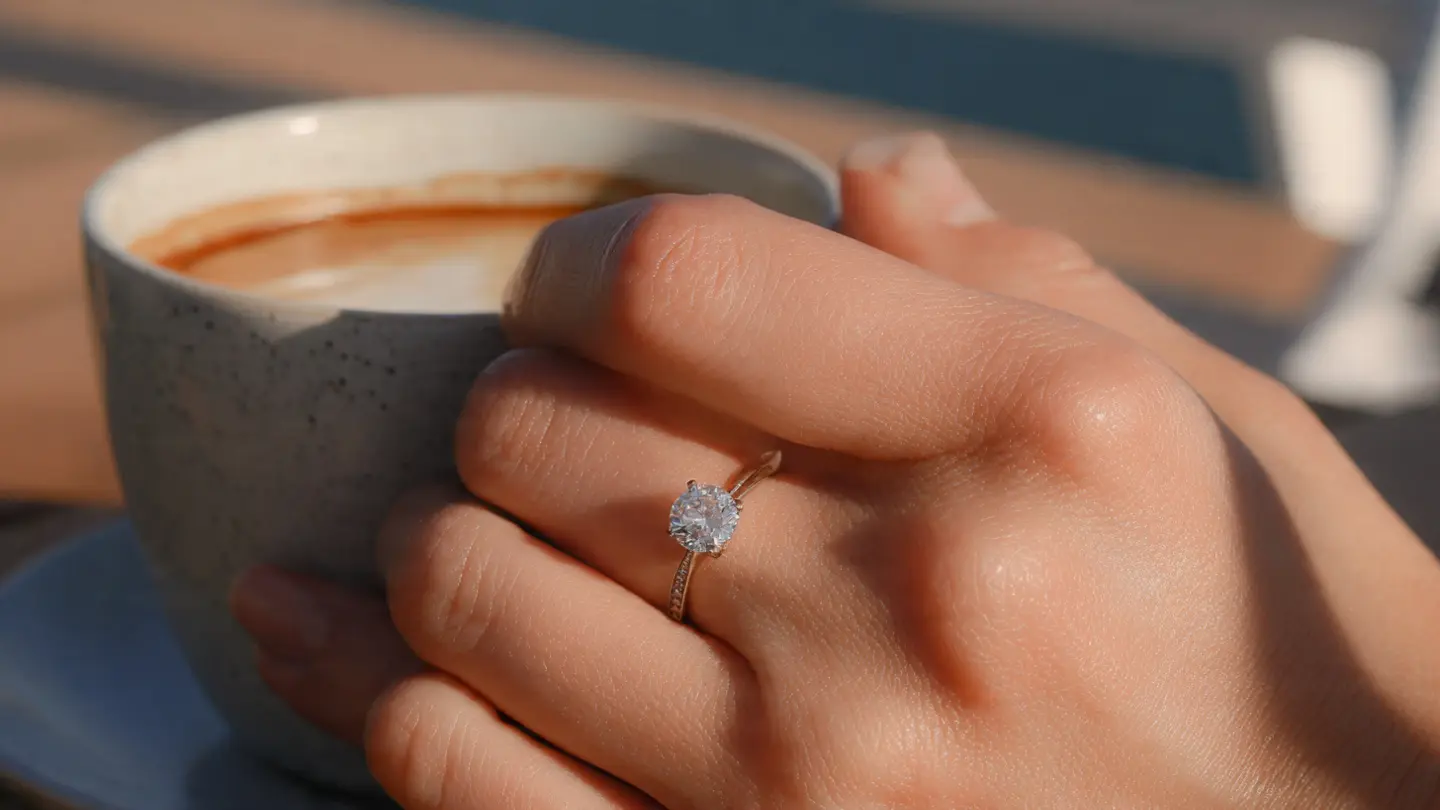
Not everyone types at a desk all day. If you're a nurse, a climber, a chef, or anyone who can't baby their jewelry, a low-profile solitaire isn't just an aesthetic choice—it's a survival strategy.
The setting makes or breaks it
Look for a "basket" or "bezel" setting that sits the diamond close to the finger. Cathedral settings (where the band arches up to meet the stone) catch on everything. A six-prong setting is more secure than four for active wear, and the extra metal doesn't add much visual weight on a smaller stone.
Stone shape considerations
Round brilliants handle daily abuse better than elongated shapes because there's no corner to chip. If you love the look of an oval or emerald cut, consider a bezel setting that wraps the vulnerable points in metal. Yes, it changes the look slightly, but a chipped corner changes it more.
Metal durability reality check
Platinum scratches more easily than gold but doesn't lose metal when it does—it just displaces. Gold wears away over time. For someone hard on their hands, platinum's actually the better long-term bet despite the higher upfront cost.
Practical tip: Test your lifestyle before committing. Wear a cheap CZ ring with a similar profile for two weeks. Notice when you have to take it off, what catches, when you worry about it. That data is worth more than any Pinterest board.
Affordable Lab Grown Minimalist Engagement Rings
Let's talk numbers. A 1-carat natural diamond with decent specs runs $4,000-6,000. Lab-grown? $1,200-2,000. For a minimalist design where the stone is the whole story, that price difference changes everything.
What "affordable" actually means
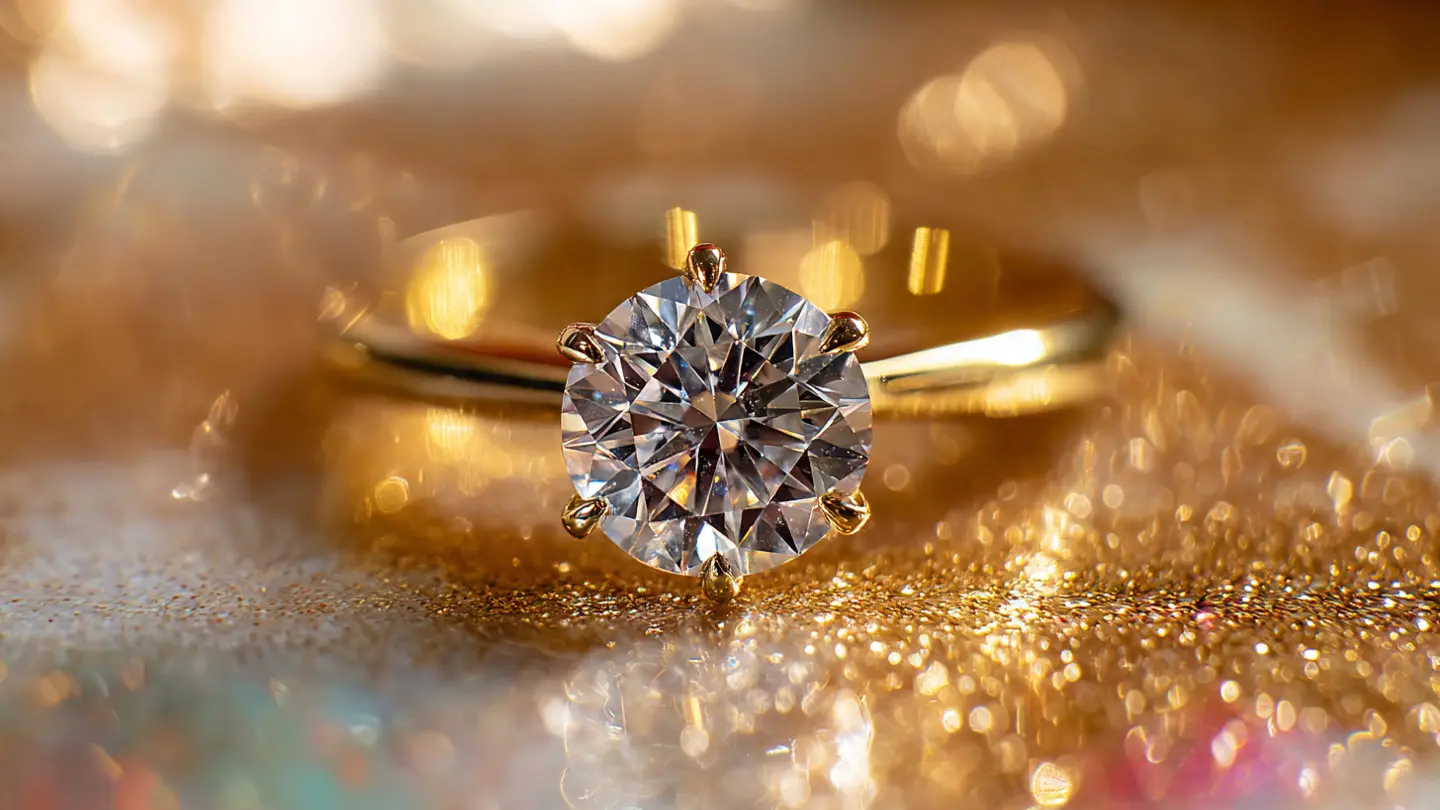
In the minimalist world, you're not paying for intricate metalwork or dozens of accent stones. Your money goes almost entirely to the center diamond. This is where lab-grown makes the most sense—you're maximizing visual impact per dollar without the setting complexity that can make synthetic stones look, well, synthetic.
The specs that matter for minimal designs
Cut is everything. In a simple solitaire, there's nowhere to hide a poorly cut stone. Prioritize Excellent or Ideal cut grades. For color, G-H is the sweet spot—any whiter and you're paying for differences you can't see without a loupe. Clarity? VS2 is usually eye-clean and saves hundreds over VVS grades.
Setting costs add up
A basic four-prong solitaire setting in 14k gold runs $300-600. Platinum doubles that. Some retailers bundle settings cheaply with lab-grown purchases, but check the metal weight—ultra-light settings feel flimsy and don't hold up.
Practical tip: Get quotes from three sources for the same specs. Lab-grown pricing varies wildly between retailers, and the "sale" price at one store might be the everyday price at another. Don't pay for branding unless you've seen the difference in person.
Elongated Oval Solitaire Rings with Simple Bands
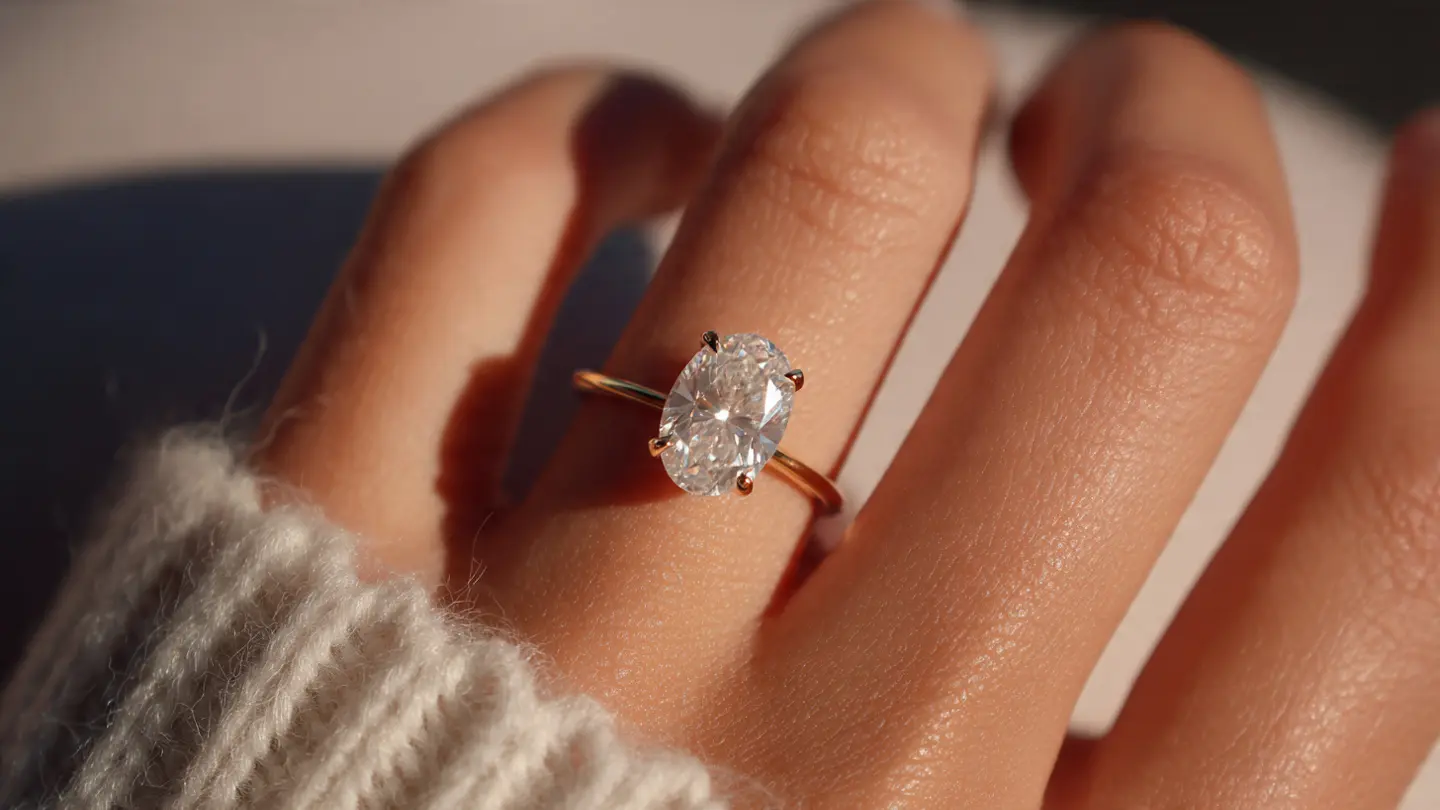
Ovals have overtaken rounds as the most requested shape in bridal consultations. The elongated oval specifically—length-to-width ratios between 1.45 and 1.55—creates the illusion of longer, more elegant fingers without the sharp points of a marquise.
Why the ratio matters
Below 1.4, an oval looks round. Above 1.6, it starts looking like a stretched circle rather than an intentional shape. The 1.45-1.55 range hits that sweet spot where the stone looks substantial but not cartoonish. It also faces up larger than a round of the same carat weight.
The bow-tie effect
Every oval has a dark shadow across the middle when viewed head-on—it's how light behaves in the elongated cut. Some bow-ties are faint, others are black bars. In a minimalist setting with no distractions, you can't hide a severe bow-tie. View the stone in multiple lighting conditions before buying.
Band pairing secrets
Elongated stones look best with bands that echo their geometry. A plain, straight band keeps things clean. If you want a wedding band later, consider how the curves will stack—some solitaire settings leave a gap that's hard to fill seamlessly.
Practical tip: Try on ovals in person if possible. They photograph differently than they look on your hand. The same stone can appear larger or smaller depending on your finger width and length. Take a video, not just photos—movement shows the cut's fire better than still images.
Making the Final Choice
You've got four solid directions now. The hidden halo if you want subtle sparkle. The low-profile solitaire if your hands work hard. Lab-grown if budget matters without sacrificing size. Elongated oval if you want contemporary elegance.
But here's the truth: the "perfect" ring is the one you'll actually wear. The one that doesn't make you nervous when you wash dishes. The one that feels like yours within a week, not like a costume you're still adjusting to.
Start with your non-negotiables. Is it budget? Comfort? A specific visual effect? Build from there. The minimalist approach works because it eliminates the noise—fewer decisions, clearer priorities, a ring that speaks for itself without shouting.
The best part? A simple design ages better than an ornate one. Trends come and go, but clean lines and good proportions don't date themselves. Twenty years from now, you'll still love it—not because it was safe, but because it was right.

