





















 Back
Back



The Ultimate Ring Care Guide: Clean Gold, Diamonds & Gemstones SafelyMeta
2026-03-21 02:32:44
The Ultimate Ring Care Guide: Clean Gold, Diamonds & Gemstones SafelyMeta
Overview:Jewelry is rarely just an accessory. Whether it is a bespoke engagement ring holding the promise of a lifetime, or a minimalist 14K solid gold band celebrating a personal milestone, your rings tell your unique story. For the modern professional woman juggling board meetings, weekend getaways, and evening yoga classes, jewelry needs to be as effortless as her lifestyle.
But maintaining that "California casual elegance" requires a touch of mindful care. Everyday elements—from the lotions we love to the hand sanitizer we rely on—can quietly dull the brilliance of our favorite pieces. While the mohs hardness scale tells us that diamonds and moissanite are incredibly tough, those cold, geological numbers don't tell the whole story. The true magic of jewelry lies in its daily wearability and the warmth it brings to your life over decades.
This comprehensive guide will walk you through exactly how to care for your most treasured pieces, ensuring their effortless beauty lasts a lifetime.
Understanding Your Jewelry's Needs
Before diving into cleaning methods, it is crucial to understand what your jewelry is made of. The care required for a resilient, lab-created moissanite differs vastly from a delicate, natural pearl.
The Enduring Warmth of 14K Solid Gold
Unlike plated or vermeil pieces that require intense coddling, 14K solid gold is the gold standard for everyday, effortless wear. By alloying pure gold with durable metals, jewelers create a metal that withstands the beautiful chaos of daily life. It won't tarnish like silver or chip like plating, making it perfect for custom pieces featuring intimate name engravings that you never want to take off.
Diamonds and Moissanite: Brilliant and Brave
Diamonds are famously the hardest natural substance on earth. Moissanite, a stunning and increasingly popular choice for modern engagement rings, is a close second. Both are uniquely suited to withstand daily wear. However, while they are difficult to scratch, they are magnets for oils and grease, which can temporarily mask their signature fire.
Colored Gemstones: Sapphires, Emeralds, and Pearls
If your aesthetic leans toward the vibrant hues of chevron rings set with sapphires or emeralds, proceed with a bit more caution. While sapphires are incredibly durable, emeralds naturally contain inclusions (often beautifully referred to as the stone's "jardin" or garden), making them vulnerable to harsh impacts or chemicals. Pearls, being organic gems, require the gentlest touch of all.
Navigating Daily Life: Protecting Your Rings
The easiest way to keep your jewelry clean is to protect it from getting dirty or damaged in the first place. Let's address some of the most common questions about wearing rings in our modern, fast-paced world.
Does hand sanitizer damage 14k gold rings?
Since 2020, hand sanitizer usage has skyrocketed, leaving many wondering about its impact on fine jewelry. The good news? The rubbing alcohol in most hand sanitizers will not damage the structural integrity of 14K solid gold, nor will it harm hard stones like diamonds, moissanite, or sapphires.
However, hand sanitizer will leave a dulling film over the surface of your gemstones, temporarily robbing them of their sparkle. More importantly, you should absolutely avoid hand sanitizer if you are wearing emeralds, pearls, or opals, as the harsh alcohol can dry out and severely damage these softer materials.
Pro Tip: If you apply sanitizer, wait until your hands are completely dry before slipping your rings back on.
Can I wear my diamond ring in the shower/pool?
It is a common habit to leave rings on 24/7, but water environments introduce unique risks.
The Shower: While plain water won't hurt solid gold or diamonds, the products you use will. Body washes, exfoliating scrubs, and heavy conditioners leave a stubborn, cloudy residue behind the stone's setting. Over time, this buildup diminishes the gem's ability to refract light. It's best to leave your jewelry on your vanity.
The Pool: This is a hard "no." The chlorine in swimming pools and hot tubs is the arch-enemy of gold alloys. Prolonged exposure to chlorine can cause "stress corrosion cracking" in gold, making the prongs holding your precious stones brittle and prone to breaking. Always store your rings securely before taking a dip.
The Home Spa for Your Rings: Safe Cleaning Methods
Even with the utmost care, your rings will eventually need a bath. You don't always need to visit a jeweler to restore that day-one brilliance.
How to clean a cloudy diamond ring at home
When a diamond or moissanite loses its fire and looks "cloudy," it isn't damaged—it is simply dirty. Oils from your skin, makeup, and cooking adhere to the facets of the stone. Fortunately, the safest way to clean them is also the easiest.
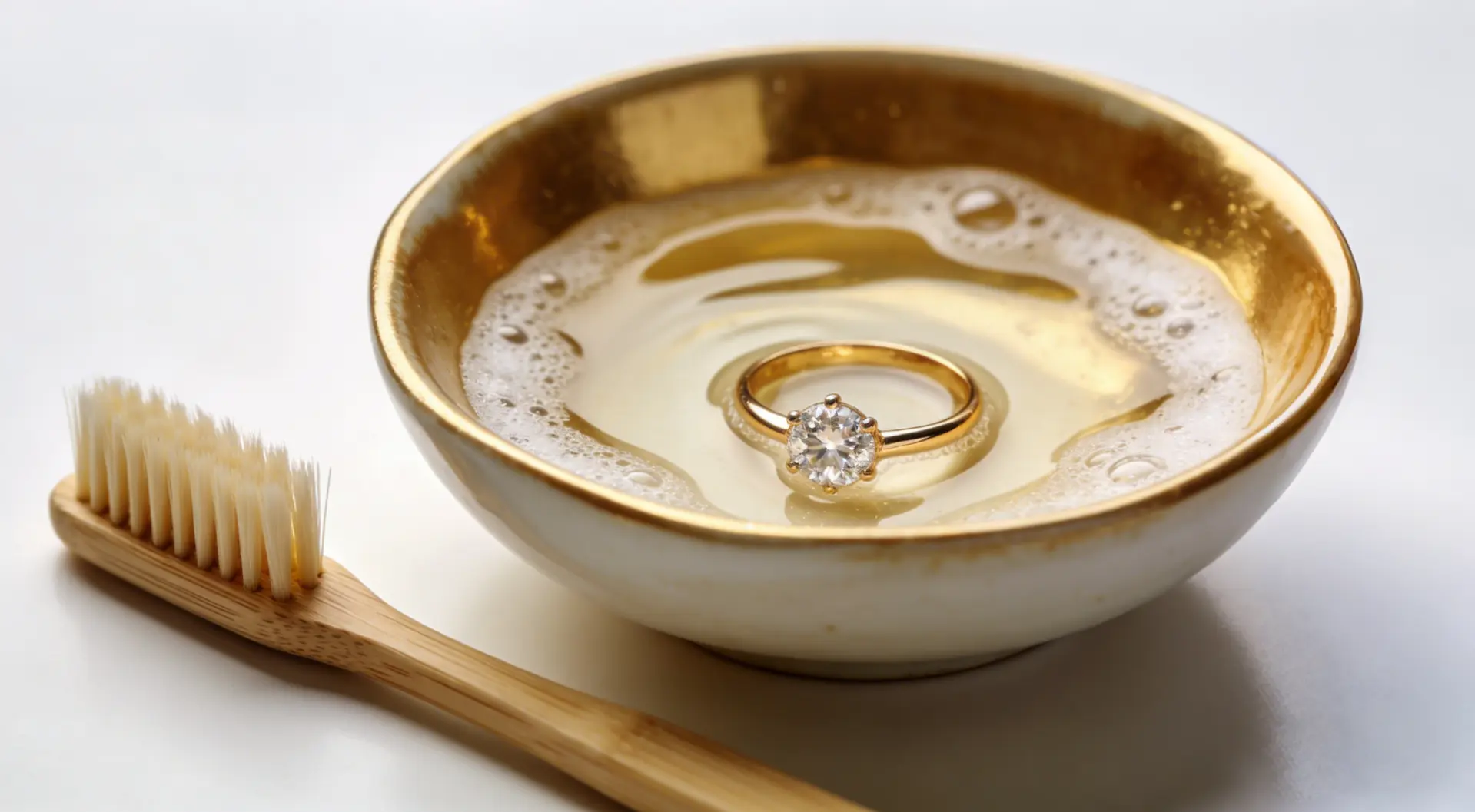
- The Soak: Fill a small bowl with warm (not hot) water and add a few drops of mild, grease-cutting dish soap. Let your ring soak for 15 to 20 minutes. This softens the hardened oils.
- The Scrub: Take a brand-new, baby-soft toothbrush—reserved entirely for your jewelry—and gently brush the ring. Pay special attention to the underside of the stone and the pavilion, as this is where most of the grime hides and blocks the light.
- The Rinse: Rinse thoroughly under a gentle stream of warm water. Always ensure your sink drain is plugged first!
- The Dry: Pat dry with a lint-free microfiber cloth. Avoid paper towels, which carry microscopic wood fibers that can scratch softer metals over time.
Advanced Care: When to Bring in the Tech
For those who love a pristine sparkle, technology offers some great at-home solutions, but they must be used with an understanding of your specific jewelry.
How to clean engagement rings with ultrasonic cleaners at home
Ultrasonic cleaners work by sending high-frequency sound waves through a cleaning solution, creating microscopic bubbles that gently knock dirt away from the jewelry. They are incredibly effective, often yielding professional-level results.
When to use them: Ultrasonic cleaners are generally safe for 14K solid gold, diamonds, moissanite, and sapphires. If you own a piece like "The Eleanor" ring—featuring a robust, high-quality setting and a hard stone—an ultrasonic cleaner can keep it looking flawlessly brilliant.
When to avoid them: The very vibrations that clean your jewelry can also cause damage. Never put emeralds, pearls, opals, or any gemstones that have been fracture-filled into an ultrasonic cleaner. Furthermore, if your ring has "pavé" settings (many tiny stones set closely together), frequent ultrasonic cleaning can vibrate the tiny prongs loose, leading to lost stones. If in doubt, stick to the soap and water method.
Building a Lifelong Habit of Care
Jewelry is designed to be worn and loved, gracefully capturing the narrative of your life. By adopting a few effortless habits—taking your rings off before the gym, keeping them away from harsh chemicals, and giving them a gentle bath every few weeks—you ensure they remain as vibrant as the day you first put them on.
We recommend having your engagement ring and everyday pieces inspected by a professional jeweler once a year. They can check for loose prongs, deep clean the settings, and polish the 14K gold back to its original, mirror-like finish.
Frequently Asked Questions (People Also Ask)
- Q: Can I use toothpaste to clean my engagement ring?
A: No. Toothpaste contains micro-abrasives designed to polish tooth enamel. While it might seem harmless, it is too abrasive for gold and can leave microscopic scratches on the metal's surface, permanently dulling its finish over time.
- Q: How often should I clean my diamond or moissanite ring?
A: For everyday wearers, a gentle at-home cleaning with mild dish soap and warm water every two weeks is perfect. This prevents heavy buildup and keeps the stone catching the light beautifully.
- Q: Will wearing my 14k gold ring every day ruin it?
A: Not at all! 14K solid gold is specifically alloyed to be strong enough for daily wear. While it will naturally develop a gentle "patina" (tiny, barely visible scratches that give loved jewelry its character), it will not tarnish, rust, or degrade from regular, daily wear.
- Q: Is it safe to sleep with my rings on?
A: It is generally best to take your rings off before bed. Bedding can snag on delicate prongs, and the pressure of your body weight resting on your hands can subtly bend the band out of shape over the years. Keep a beautiful trinket dish on your nightstand to make taking them off an effortless nighttime ritual.

