User
Your Orders
Account
Your Shopping Cart
Total Amount:
USD
0.00



2026-03-30
You found the ring of your dreams online. The stone sparkles. The setting is exquisite. But then you slide it onto your finger—and something feels off.
Here's the truth they don't always tell you: a wedding ring doesn't exist in isolation. It lives on your hand. And the same ring can look dramatically different depending on whether you have petite fingers, long elegant digits, or broad, masculine hands.
We've studied how rings actually wear in real life. This guide will help you understand what works for your specific hand type—before you make that lifelong commitment.
Small hands with short fingers present a unique styling challenge. The wrong ring can overwhelm your hand; the right one can create the illusion of length and elegance.
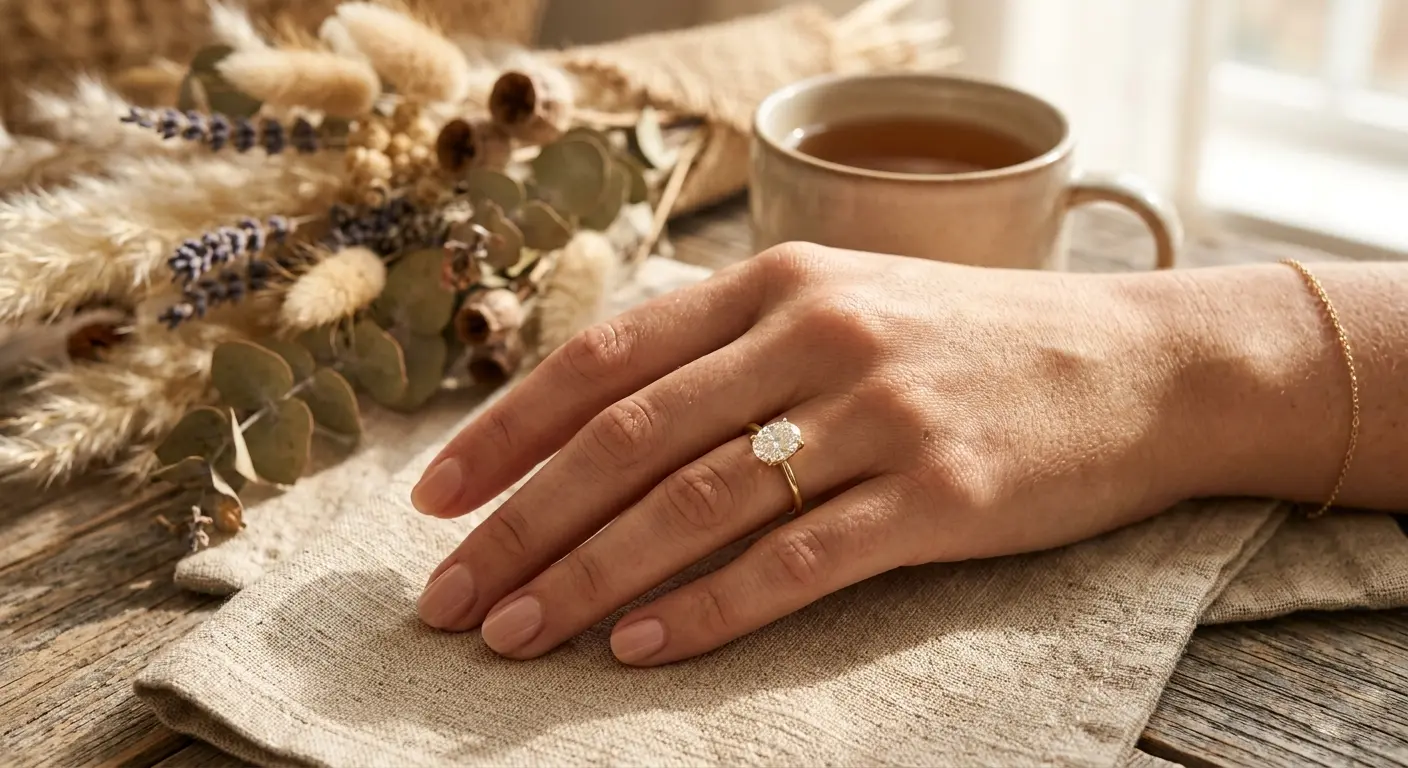
Your goal is visual length. You want the eye to travel up the finger, not across it.
Oval diamonds are your best friend. Their elongated shape naturally draws attention vertically. A 1-carat oval can make your finger look significantly longer than a 1-carat round brilliant of the same weight.
Marquise cuts take this even further. Their pointed ends create maximum length illusion. Yes, they're a bit vintage—and that's part of their charm. Modern settings have made marquise cuts feel fresh again.
Pear shapes work similarly, with the added benefit of being able to point the tip toward or away from you, depending on which direction you prefer.
On small hands, band width is critical. Here's what we've learned:
Thick, chunky bands—no matter how trendy—will dwarf small hands. Stick to slender profiles.
Low-profile settings keep the stone close to your finger. High settings can look top-heavy and catch on everything from sweater sleeves to hair.
Pavé bands add sparkle without adding visual weight. The tiny diamonds catch light without demanding attention.
East-west settings (where an oval or marquise sits horizontally) can actually work well on short fingers. Instead of extending up the finger, they create a modern, balanced look that doesn't fight your proportions.
If you have small hands, you don't need to "compensate" with a huge stone. A well-proportioned 0.7 to 1-carat diamond in an elongated cut will look more elegant than a poorly proportioned 1.5-carat round.
Long, slender fingers are the supermodels of the hand world. They can wear almost anything—but some styles truly sing on this canvas.
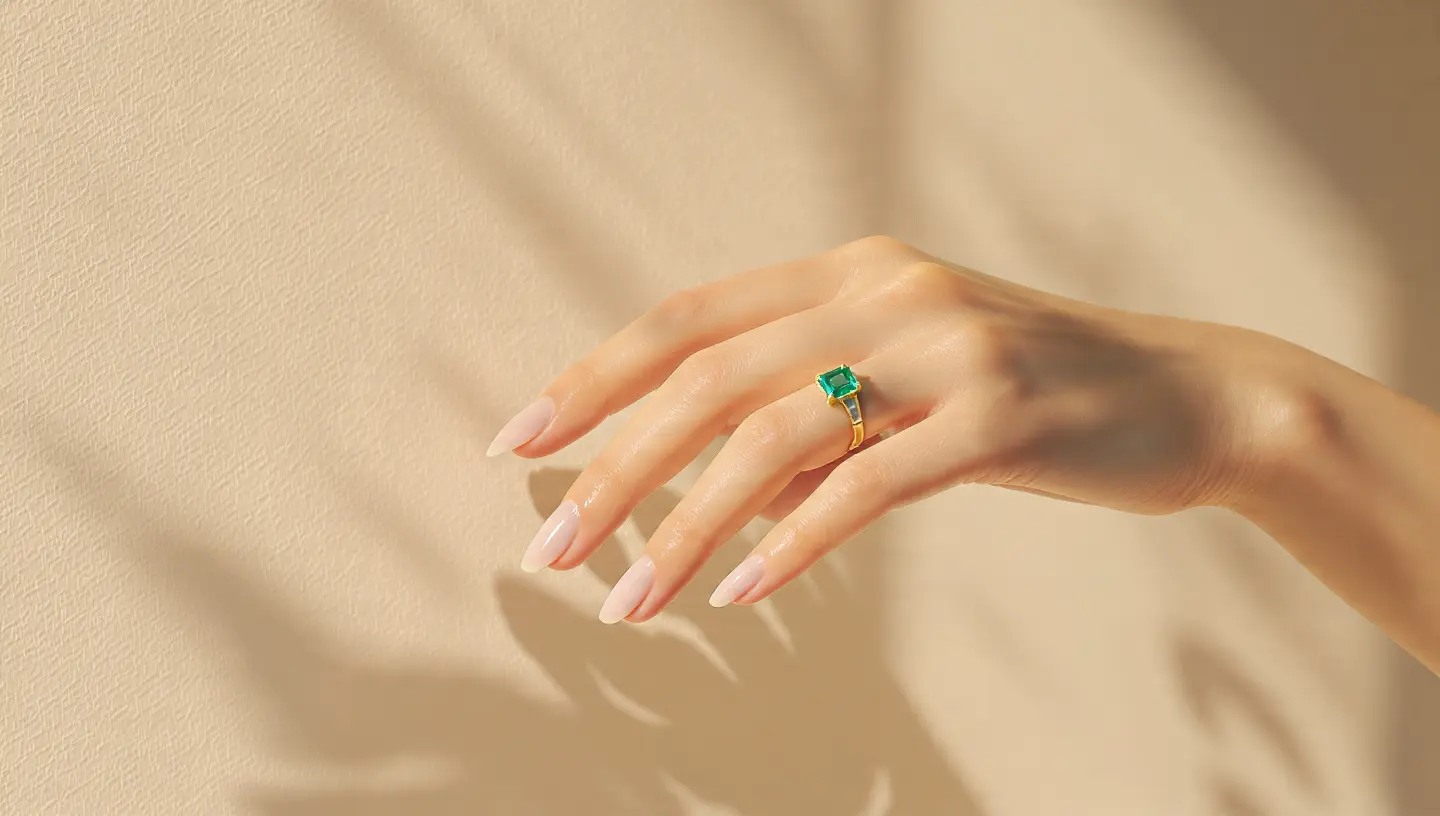
Emerald cuts were made for long fingers. Their rectangular step-cut facets create a hall-of-mirrors effect that looks architectural and sophisticated. On shorter fingers, they can look too horizontal. On long fingers, they have room to breathe.
Asscher cuts offer the same geometric appeal with a square shape. They're bold without being flashy—perfect for someone who wants presence without ostentation.
Cushion cuts fill space beautifully. Their rounded corners soften the look while their substantial table (the flat top) provides plenty of finger coverage.
Radiant cuts combine the best of both worlds: the shape of an emerald with the brilliance of a round. They're particularly striking on long fingers because they can handle the extra surface area.
Here's where long fingers have a real advantage: you can wear substantial bands without looking like you're playing dress-up.
Split shank bands (where the band splits as it approaches the center stone) create visual interest and fill space elegantly. On small hands, they can look busy. On long fingers, they look intentional.
Wide bands (3mm to 4mm) balance your finger length. A delicate 1.5mm band might actually look too slight on a long, slender finger.
Statement settings—intricate vintage-inspired galleries, double halos, detailed metalwork—have room to show off. These details won't crowd your hand or feel excessive.
Long fingers can handle larger stones. While someone with small hands might find 1 carat to be their sweet spot, long fingers can comfortably carry 1.5 to 2 carats without the stone looking disproportionate.
That said, don't feel pressured to go big just because you can. A beautifully cut 1-carat stone in an elegant setting will always outperform a mediocre 2-carat stone.
Long fingers can handle:
Your hand has the architecture to support experimentation. Use it.
The ring stack trend isn't going anywhere. But there's a difference between a curated collection and a finger that's wearing every ring you own.
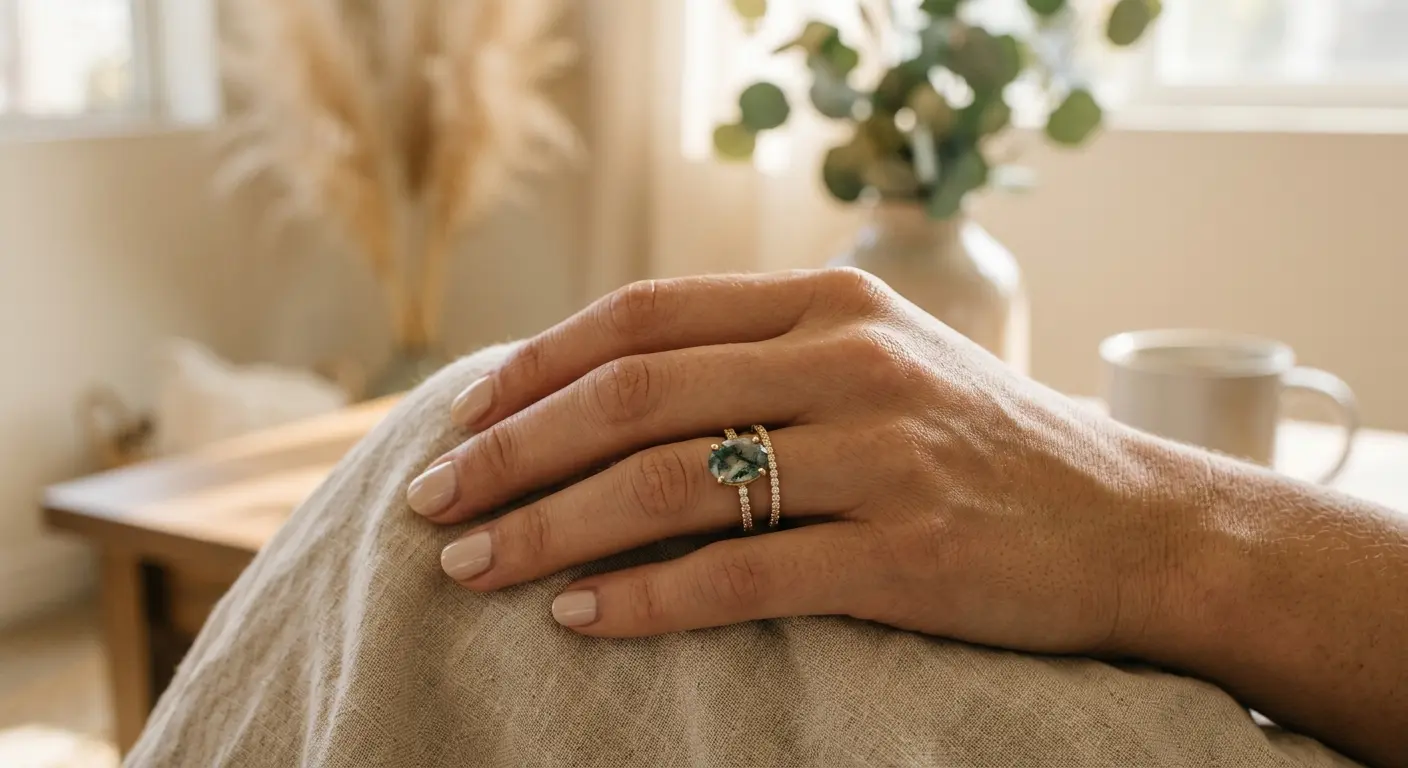
Everything starts here. Before you add a single band, understand your engagement ring's DNA:
Most people stop here—and that's perfectly fine. The engagement ring plus wedding band combination is classic for a reason.
Option 1: The MatchA wedding band designed specifically for your engagement ring. Same metal, same width, complementary design. Clean, timeless, no guesswork.
Option 2: The ContourA band shaped to follow your engagement ring's curves. Creates a seamless, almost single-ring look. Ideal if you dislike gaps.
Option 3: The ContrastA simple, straight band that sits slightly apart from your engagement ring. The small gap is intentional—some find it charming, others distracting. Personal preference.
Many couples add an anniversary band after a significant milestone. Placement matters:
Minimalist doesn't mean boring. It means intentional. Here's how to do it:
Stick to two metals max. Yellow gold and white gold play beautifully together. Adding rose gold, silver, and platinum starts to look chaotic.
Vary widths slightly. A 2mm engagement ring band pairs well with a 2.5mm or 3mm wedding band. Too matchy-matchy looks like a set; too different looks accidental.
Keep total width under 8mm. Beyond that, rings start to feel bulky and can restrict finger movement.
Consider negative space. Not every finger needs a ring. A single band on your right middle finger can be more striking than three rings crammed together.
Who says all rings go on your ring finger?
Just keep it balanced. If your left hand is stacked, keep the right hand simpler.
Men's wedding bands have come a long way from the simple gold circle. Today's options range from whisper-thin to statement-wide. Choosing the right width is about proportion, lifestyle, and personal style.
2mm to 3mm: The Understated Choice
Best for:
These slim bands look refined and intentional. They won't dominate your hand or draw unnecessary attention. If you've never worn jewelry, this is a comfortable entry point.
4mm to 5mm: The Universal Sweet Spot
This is the most popular width for good reason. It works for:
A 4mm to 5mm band photographs well, feels substantial without being heavy, and transitions seamlessly from boardroom to weekend. If you're unsure, start here.
6mm to 8mm: The Bold Statement
Best for:
Wider bands make a statement. They feel masculine and modern. However, they can interfere with gloves, feel heavy during workouts, and may not suit formal occasions.
8mm+: The Extra Wide
Approach with caution. These require:
On average hands, they can look like costume jewelry. On the right hands, they create a powerful, contemporary look.
Here's a simple way to think about it: your band width should roughly match the width of your finger above the knuckle.
Fit affects width perception. A wide band fits tighter than a narrow band of the same size. If you're choosing 6mm or wider, consider sizing up by a quarter or half size.
Comfort fit vs. standard fit:
Most men prefer comfort fit for daily wear.
Office/work from home: Any width works. Choose based on aesthetics.
Manual labor: Narrower bands (4mm or less) are less likely to catch on equipment or scratch. Consider a silicone ring for work hours.
Active lifestyle: Gym-goers and athletes often prefer slimmer bands that don't interfere with grip. Some remove rings entirely for sports.
Glove wearers: If you wear work gloves regularly, measure with gloves on. Very wide bands may not fit comfortably.
Classic Professional
Contemporary Style
Alternative Edge
If possible, wear sample bands for a few hours before committing. What looks good in the mirror for thirty seconds might feel different after a full day of typing, driving, and living.
Pay attention to:
At the end of the day, the best wedding ring is the one that feels right on your hand.
Small hands? Embrace delicate, elongating designs. Long fingers? Go bold and experimental. Building a stack? Start with your engagement ring and add thoughtfully. Choosing a men's band? Prioritize comfort and lifestyle fit.
The most beautiful ring in the world means nothing if you don't want to wear it every day.
Visit a jeweler. Try on styles you think you won't like—you might be surprised. Take photos from multiple angles. Wear samples for an afternoon. The right ring is out there, and you'll know it when you feel it on your finger.
Ready to find the ring that was made for your hand? Browse our collection or schedule a personal styling session with our experts.