User
Your Orders
Account
Your Shopping Cart
Total Amount:
USD
0.00



2026-03-27
Overview:You've been scrolling through Pinterest boards filled with halos, pavé bands, and intricate vintage settings. The options feel endless—and honestly, a bit overwhelming. But something keeps pulling you back to those clean, simple designs. The ones that don't try so hard.
Here's the truth: a minimalist engagement ring isn't about having less money to spend or less taste to express. It's about knowing exactly what you want and refusing to let extra details dilute it. This guide will walk you through whether this style fits your life, your hands, and your budget—without the fluff.
The minimalist trend isn't just aesthetic. It's practical. But it's not for everyone.
You might love a minimalist ring if:
You might struggle with minimalism if:
Quick check: Look at the jewelry you actually wear daily. Not the pieces in your box—the ones on your body right now. If they're simple, a minimalist ring will feel like home.
Here's something jewelers don't always mention upfront: proportion matters more than carat size.
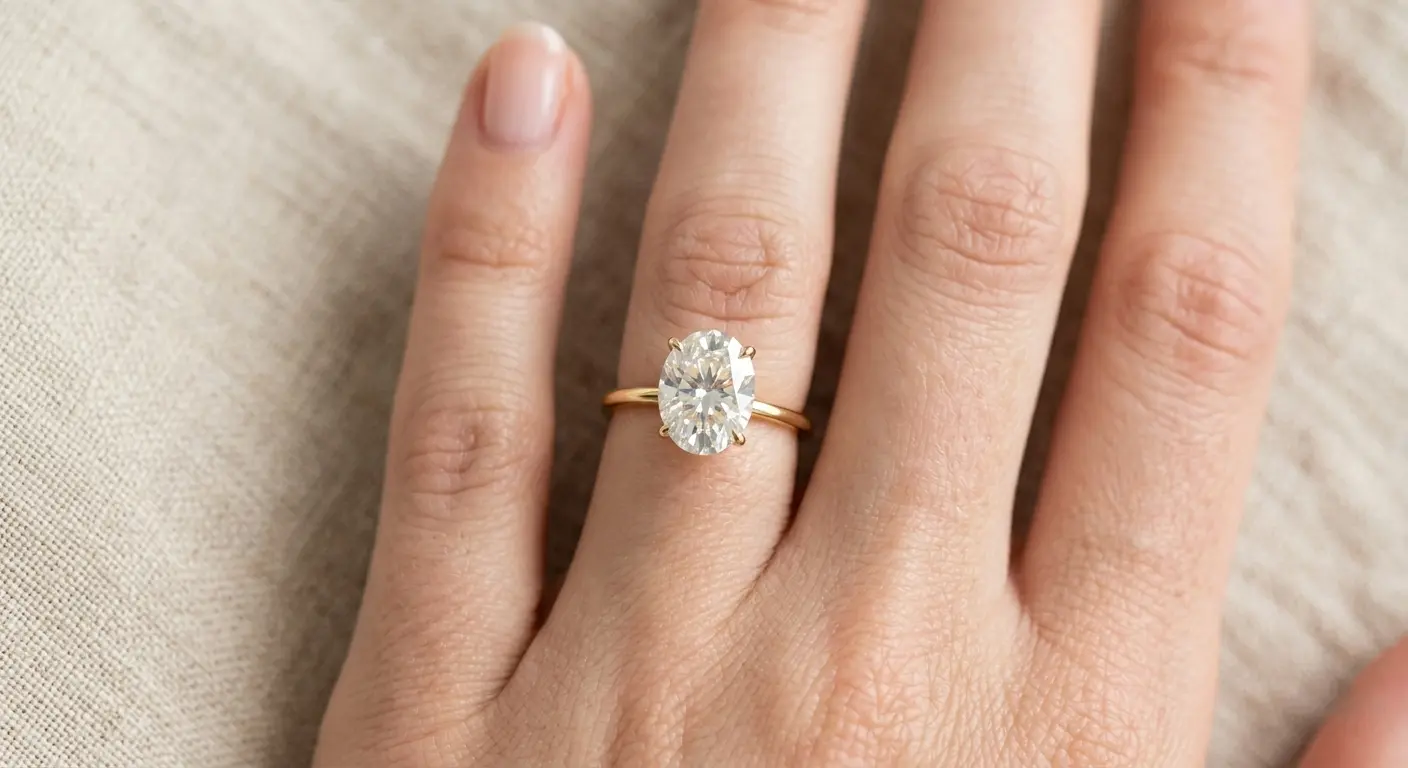
A massive halo on a size 4 finger can look like costume jewelry. But a delicate solitaire? That reads as intentional and elegant.
Practical tip: If you have small hands but love a particular bold design, try it on in person. Photos lie. Your eye adjusts to what's actually on your finger, not what looked good on a model.
Minimalist rings often cost less—but not because they're "cheap." You're simply paying for less metal and fewer small stones.
Where the savings come from:
The real budget hack:
Spend your money on the stone's cut. A well-cut 0.7-carat diamond faces up nearly as large as a poorly cut 1-carat—and sparkles significantly more. In a minimalist setting, that cut quality is everything.
The band is where minimalist rings live or die. Too thin, and it bends or snaps. Too thick, and you've lost the aesthetic.
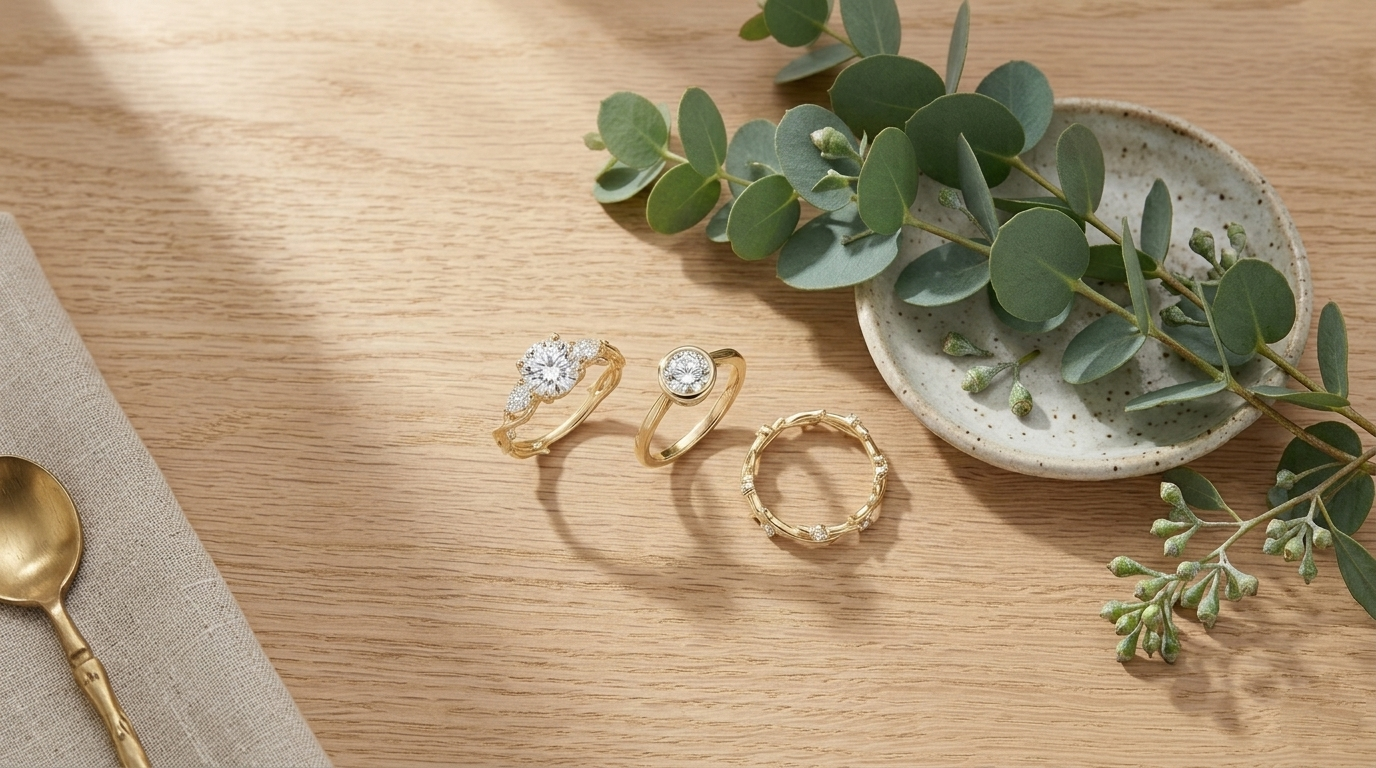
Practical tip: If you're choosing a thin band, opt for 14K gold over 18K. The alloy is harder and more resistant to bending. Platinum is even better for durability, though it costs more upfront.
Minimalist doesn't mean generic. The best simple rings have one distinctive detail that makes them unmistakably yours.
Ways to personalize without adding clutter:
Don't add so many "subtle" details that they compete with each other. Pick one. Let it be the thing someone notices on their third look at your hand.
A minimalist engagement ring isn't a compromise. It's a decision to let one beautiful thing speak for itself.
You'll wear this ring through job interviews, hospital shifts, workouts, and quiet mornings at home. The question isn't whether it's impressive enough for Instagram. It's whether it feels right when you glance down at your hand—today, in five years, in twenty.
The best minimalist rings answer yes to all of that. And they do it without saying too much.